
the creative compass - navigating creative blocks
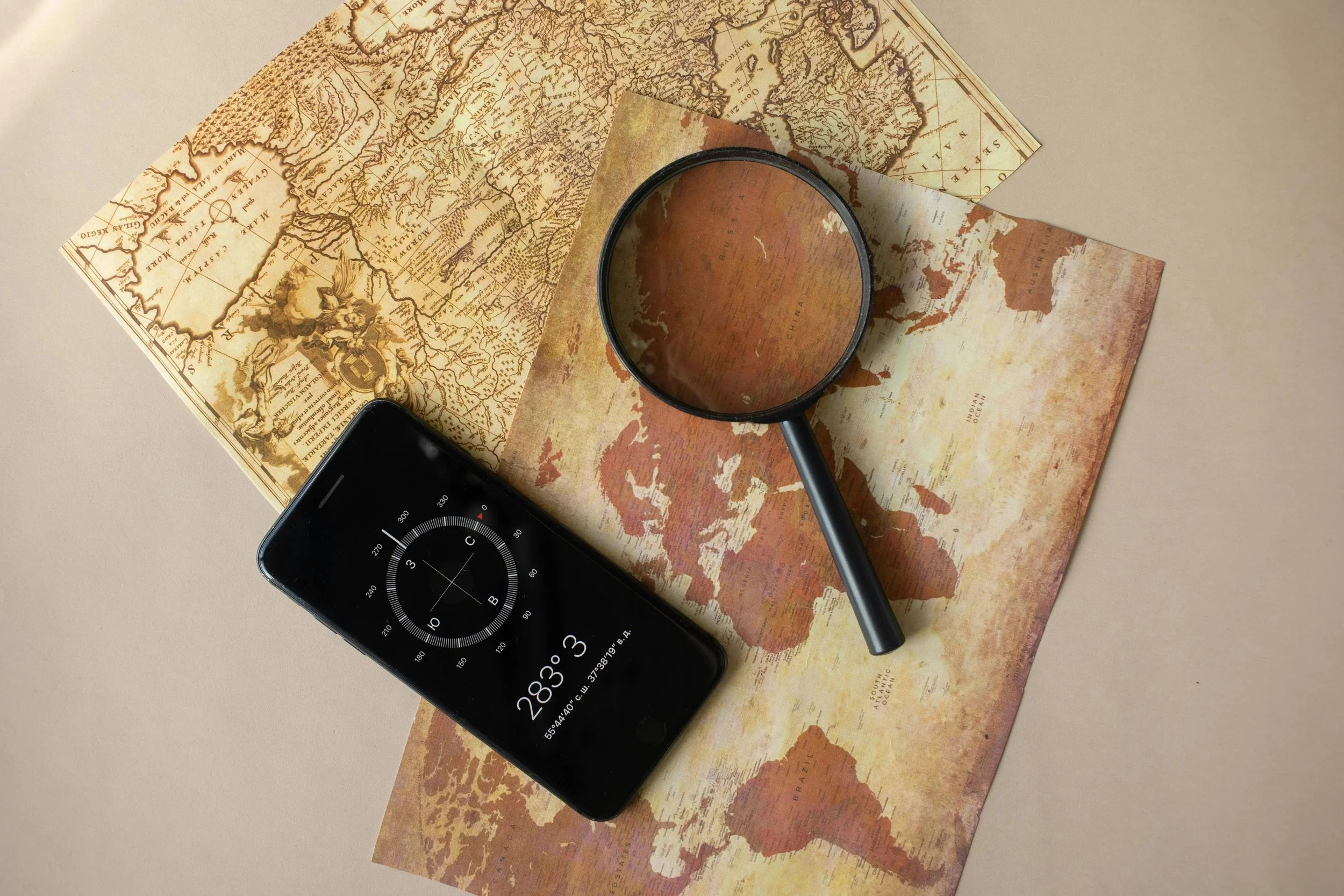
Everyone suffers from creative blocks. They are a rite of passage in the realm of creativity. A creative block is something that makes it difficult to express creativity. As a result, one finds themselves stuck in creative quicksand.
Blocks come in all shapes and sizes:
Imposter syndrome
Comparisons
Perfectionism
Pressure
Unrealistic and unfair expectations
Negative self-talk
Fear of failure
Fear of success
Trouble organizing ideas
Fear of what other people think
A lack of of inspiration/motivation
Stress and burnout
Avoidance
The sudden urge to clean anything and everything before returning to your creative pursuit
Binge watching tv
Doom scrolling
I think you get the idea (and yes, I’ve experienced every single one of these, and more).
Ultimately, the root of almost all creative blocks can be traced back to limiting beliefs we carry about ourselves and creativity. The way we think has a direct impact on our relationship with creative expression.
Naturally, we tend to meet these blocks with frustration, judgment, and at times, defeat. This doesn’t actually help or serve us, and it certainly doesn’t break down our blocks. It only hardens them. Our blocks can be just as stubborn as we are. Some people even turn to AI to create for them when feeling blocked. I strongly discourage this, which you can read more about here.
One of creativity’s many medicinal functions is helping us deepen the relationship with ourselves. The deeper we venture into our own selves, the higher we elevate our awareness, our consciousness. While this is certainly a beautiful and transformative experience, it can also be quite terrifying.
In Jungian psychology, the island is a common symbol for the conscious mind, while the ocean is a common symbol for the unconscious mind.
Creativity is a process that demands us to set off from the island into the depths and uncharted territories of the ocean. It demands we stop running from ourselves in the form of seeking distractions in the outer world, and embark instead on an inward journey.
It’s only natural that the deeper we venture into the ocean that is our unconscious mind, the more obstacles we encounter in the layers of our psyche. The waves, the storms, the predators. These are our wounds and pain points that remain unhealed. And yet, the depth of exploration never ends. As we survive one storm, another one waits for us to weather.
These obstacles we encounter in exploring the creative parts of ourselves are our creative blocks. Only, creative blocks are not exclusive to our creative lives. The same blocks - rooted in our thinking and beliefs, which are rooted in painful past experiences - show up in other areas of our lives, including romantic relationships, friendships, family, career, and so on.
No one can elevate to a higher version of themselves without facing these blocks. That’s why it’s a rite of passage, a rite of passage to higher consciousness.
Think of it like a video game. We can’t advance to a higher level without completing the lower levels first. We need to build and strengthen the skills that will help carry us through the various levels, each with various trials, in order to win the game.
As I said earlier, we more often than not meet our creative blocks with frustration, judgment, and defeat. But our blocks are not surfacing to make us feel frustrated, judged, and defeated. They’re showing up in order to get our attention. After all, they have a claim on us. Our vessel speaks to us not through words, but through emotions. When blocks arise and fill us with fear and other uncomfortable emotions, it’s because they want us to listen and heal what is fragmented in our psyche, so we can integrate. The blocks are not emerging to hurt us, they’re emerging to help us. When we listen and begin tending to them, not only do they dissolve and transform in our creative life, but in other areas of our lives as well.
As we create, we integrate.
I’m sure you’re wondering, well how do I do this?
There are numerous ways to transform creative blocks. In a different blog post, I talk about the “Ritual Response” to creative blocks, which you can read about here. You can also download my free e-guide, Rituals to Enhance Your Creative Life, where I discuss the power of ritual, as well as the Three Pillars of Vitality that are essential to your creative life force.
Today, I’m going to share a process that I developed called the Creative Compass. This is foundational in addressing blocks. This compass guides you through four cardinal points, thereby helping you chart a course for navigating and transforming creative blocks. You can use this to shift your mindset in any area of life, but here I’ll be discussing it in the context of creative life.
The guiding points are:
North - Consciousness
East - Curiosity
South - Compassion
West - Change
I also encourage you to check out my free Transform Your Creative Blocks Workshop, where I go more in depth about creative blocks and how to transform them using the Creative Compass. Don’t forget to download the free companion handbook for this workshop, The Creative Compass Handbook. You can also access this free workshop on YouTube.
Think of the Creative Compass as a replacement for the Criticism Compass, which is the compass most of us tend to use as we navigate challenges. The Criticism Compass is a guide for staying stuck in our creative blocks. Criticism will only perpetuate an unhealthy cycle where the roots of our creative blocks remain unseen, unheard, and therefore, unaddressed.
Consciousness
As I always remind my clients and myself, consciousness is the key to everything. That is why I consider consciousness not only North in the Creative Compass, but True North in the compass of our lives, always guiding us to our truest, most authentic selves. The first step is always consciousness. Consciousness is to notice and reclaim awareness of your inner and outer worlds.
You notice without judgment, and without yet trying to change the situation.
When you’re experiencing a creative block, you want to consciously call it out for what it is.
“I’m experiencing a creative block.”
In order to recognize a creative block, begin by growing familiar with how a block shows up in your mind and body. Perhaps there’s a thought pattern that always arises when you’re feeling blocked (e.g., I’m not good enough; I should just quit now; My mind is always blank when I sit down to create; I’m not talented; I’m not a creative person; etc.). Perhaps there are bodily sensations that signal a block (e.g., tightness in your chest, feeling sluggish, growing hot in the face, a weight in your stomach, etc.). Taking the time to learn how a block manifests in your mind and body is itself a form of consciousness, which then allows you to name a block when it arises.
Curiosity
Once you are in the conscious experience of a creative block, you want to interact with the block, not with criticism, but with curiosity. The intention here is to understand the block, to listen and hear what it is trying to tell you. This is one of the most important steps for deepening the relationship with yourself.
Curiosity invites you to ask questions, and opens the door to self-reflection and growth.
When you are curious about someone, you ask them questions so you can learn more about them. The same applies to the relationship with yourself. In order to better understand yourself and your blocks, you have to ask them questions.
Go back to the list of blocks from earlier in this post and pick the one you’ve most recently experienced.
Then proceed to ask yourself:
What triggered this block?
When and where else in my life have I experienced this block?
What are the thought, emotional, and behavioral patterns that accompany this block? [e.g., Thoughts (I’m not good enough) -> Emotions (anger and despair) -> Behaviors (avoiding/quitting the project I’m working on)]
When and where in my life did this block originate? (e.g., family, school, a particular experience, through a series of events)
How can my creative blocks actually be opportunities?
What are my expectations of myself and my creativity?
Where did I learn the unfair and unrealistic expectations that I’m placing upon myself and my creativity?
What scared me most about creativity? What excites me most about creativity?
How much does the opinion of others impact my creativity?
If I’ve disliked other people’s creative work (e.g., art, writing, design, etc.), isn’t it fair for others to dislike mine? Why might I hold this double standard?
Imagine someone whose creative work you dislike. How do you think they cope with your opinion of their work?
What does it mean to create for myself vs for others?
What is it that I’m truly avoiding when putting off my creative pursuits?
Why do I avoid facing this block? What might it force me to confront within myself? What uncomfortable emotions might it bring up?
Why might I not consider myself creative?
What messages and beliefs about creativity have I inherited from family, society, the overculture, etc.?
What kind of creative and personal growth might exist on the other side of this block?
If this block appeared in the form of a person asking for help, what kind of help would they be asking for?
What painful experiences is this block trying to help me work through, resolve, and heal from?
If I wasn’t afraid, what would I create? What aspects of creativity would I explore? (To learn more about what your soul wants vs what your ego wants, you can read this blog post here. You can also take my free Connect With Your Inner Creator Quiz to find out what creator type you are)
Knowledge is power. The more you learn about yourself, the more you empower yourself, the more love and faith triumph over your fears. The more fear you overcome, the more love you encompass, or perhaps, the more love encompasses you.
Compassion
Compassion is responding to the pain and suffering of others with care and kindness. Self-compassion is responding to our own pain and suffering with care and kindness.
Compassion paves the way to change, while criticism keeps us stuck in our pain. Compassion softens the limiting belief, allowing us to reshape it.
Most of us are good at compassion, but poor at self-compassion. We tend to give others grace, and criticize ourselves. This is because when we are comforting another person, we are not burdened with their thoughts, emotions, pain, and life history in our body. But when the challenge is our own, we carry it all within us. We might feel distressed and dysregulated, which makes it difficult to turn to self-compassion.
This is why learning how to regulate your nervous system and self-soothe is crucial, and it makes it more likely for you to respond to your creative blocks with self-compassion instead of criticism.
Just like consciousness and curiosity, self-compassion is a skill and muscle we must strengthen through practice. Self-compassion does not mean avoiding accountability. Don’t confuse compassion with coddling. There is a way to acknowledge your flaws and shortcomings without devaluing yourself.
Because compassion comes more easily than self-compassion, we are going to use the former to our advantage to strengthen the latter.
Once you are conscious of your block, and curiosity has led you to understand its roots, now it’s time to respond with self-compassion. Use these prompts to help you.
If my block suddenly assumed the form of the Wise Woman archetype, what would she say to me? How might she guide me?
If my creativity assumed the form of a person, what would they look like? How might I comfort them, nurture them, and give them hope?
What would I say to a loved one who was experiencing the same block for the same exact reasons as me?
If the five-year-old version of me (or any other age) was sitting in front of me, struggling with this same block, what would I say to them?
What would I say to my child-self to encourage them and their creativity?
What do I wish had been said to me growing up to help me nurture and cultivate my creativity? What would have helped me feel encouraged to explore my creativity growing up?
If I loved myself fully, how would I treat myself differently right now?
What do I wish someone would say to me right now to give me hope?
What is it that I need right now to feel better?
Remember that choosing self-compassion serves only you and your creative life, and choosing criticism likewise hurts only you and your creative life.
Change
Notice that the last step is change. Most people want to jump to this step right away. As Robert A. Johnson often discussed in his work, our modern Western civilization has a “doing” problem. We’ve not only forgotten, but undervalue, the art of “being.” Having lost this balance, we are in many ways an imbalanced society.
The first three steps - consciousness, curiosity, compassion - are all about “being.” Reflecting, introspecting, exploring, learning, understanding, humanizing. “Being” present and mindful with yourself. This “being” builds a necessary foundation that allows you to move into the fourth and final step of the process, the “doing” step of change. Without these preceding steps, change is futile.
Remember that almost all creative blocks can be traced back to limiting beliefs we carry about ourselves and creativity. Hopefully the first three steps have shed some light on what these limiting beliefs are and where they come from.
In the fourth step of change, we are going to address these limiting beliefs. Reframing thoughts and beliefs doesn’t mean thinking “perfectly,” it just means thinking “differently.”
We can’t control our automatic thoughts, only how we respond to them. When we’ve believed something painful for years, questioning it can feel disorienting. Yet, if we wish to elevate to a higher version of ourselves, if we wish to heighten our consciousness and function primarily from a place of love, then we must ride the disorienting wave until it passes, as it always does. In other words, if we want to transform our blocks and grow, then we must persevere through the discomfort and resistance that inevitably comes with changing our limiting thoughts and beliefs.
Here are some questions to help you actively reframe your thoughts and limiting beliefs:
If I were to rewrite this thought from a place of love and faith, rather than fear, how would it change?
How does this limiting belief impact the way I show up in my creative life? How might shifting to a different belief change the way I show up in my creative life?
Is this a fair expectation to have about myself and creativity? What might be a fair, kind, and realistic expectation?
How does this thought/belief serve me and my creativity? Hurt me and my creativity? What kind of a thought/belief would fully serve me and my creativity instead?
If God, the Ultimate Creator, has already imparted me with my unique creative gifts, how can I begin to nurture, cultivate, and honor these gifts?
How does engaging in creativity serve as worship in my own life?
What’s a different thought/belief that would align with my values?
What would the highest/best version of me think/believe right now?
Would I think this way if I had grown up in a different family, culture, or environment? What might I think instead?
What thoughts/beliefs about creativity do I want to unlearn? What thoughts/beliefs do I want to replace them with?
How do I want to define creativity for myself?
How is creativity tied to my purpose?
What’s a different way I can think about this that will make me feel better?
How do I want to respond to negative self-talk about creativity? (Try and create a mantra or affirmation for this)
If you use this Creative Compass to navigate the ocean that is your unconscious mind, where you will inevitably face the storms of your creative blocks, it will change your response and relationship to your creative blocks, and thus, to creativity. You will work with them, rather than against them. You will respond to blocks in a way that preserves your self-respect and capabilities, rather than shattering your sense of self. You will transform your blocks into bridges that connect you to the inner creator you were always meant to be, and to your divine purpose, gifts, and callings.
Working through blocks isn’t meant to be a purely “logical” experience. You don’t want to treat these steps and prompts like calculus homework (clearly, I did not enjoy calculus). This is meant to be a deeply emotional experience. It is emotion that drives change, not logic. Emotions make us feel connected to ourselves, our values, and our creativity. Emotions are an energy force, and it is energy and connection that move us forward and help us create change. You have to feel it, to heal it. Take the time to sit with these questions and reflections in depth, and fully embrace the emotions that follow.
Most importantly, remember that this Creative Compass is not a one-off fix. It is a lifelong practice of relating to yourself and to the world around you. Learn how to use this compass effectively, and watch as your creative blocks dissolve, transform, and enrich your inner and outer worlds.
